Cary Orthopaedics

Cary - 919.467.4992
Garner - 919.779.3861
Spine Center - 919.297.0000

Orthopaedic Shoulder Total Joint Replacement Surgery

  • Cervical SpineCervical Spine
  • Lumbar SpineLumbar Spine
  • ShoulderShoulder
  • ElbowElbow
  • HipHip
  • Wrist/HandWrist/Hand
  • KneeKnee
  • Ankle/FootAnkle/Foot
  • Shoulder

    Orthopaedic Shoulder Total Joint Replacement Surgery Description

    The aim of orthopaedic shoulder total joint replacement surgery is to replace the arthritic ends of the shoulder joint with prosthetic components. With the replacement of the damaged joint comes the expectation of pain relief and improved shoulder mobility for patients from Raleigh, Cary, Garner, Apex, Chapel Hill and the Triangle.

    Orthopaedic shoulder total joint replacement surgery is rarely recommended in patients that are younger in age. The reason for this is the limited life span of the replaced shoulder with expectations of 10-15 years before the components will need to be replaced. This procedure is felt to have a high success rate, however when the components need to be replaced (revision) this procedure does not usually yield as good a result. Generally shoulder replacement should not be performed on patients under the age of 50 due to this limited life span unless there are special circumstances surrounding the condition, such as significant trauma or intractable pain.


    The ideal orthopaedic shoulder total joint replacement surgery would involve both the ball and socket of the shoulder. On occasion, only the ball (humeral head) can be replaced. This usually happens when there is an irreparable rotator cuff tear or in the event the socket exhibits no damage. The extent of the surgery can be determined at the time of surgery.

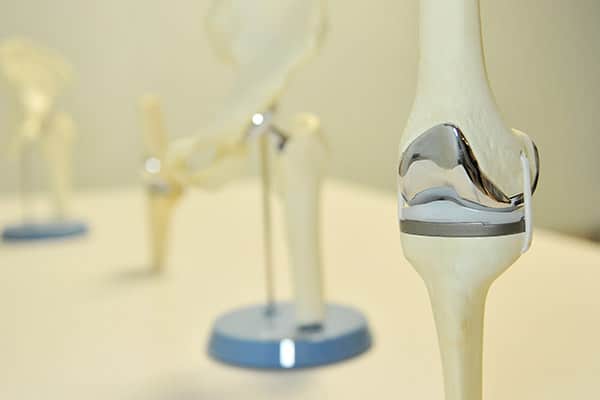
    The replacement components are made of both plastic and metal. The ball (humeral head) is typically made out of a metal titanium and the socket (glenoid) made of a polyethylene plastic material. Fixation is usually by cement but may vary according to surgeon preference and the patients bone quality as well as the condition of the rotator cuff.

    Orthopaedic shoulder total joint replacement surgery usually takes about two hours. A surgeon makes an incision  across the front of the shoulder and into the upper arm. The joint is exposed and the damaged humeral head is removed. The replacement socket is then inserted by the surgeon and if necessary, the rotator cuff muscle is repaired. There will be altered sensation along the incision site.

    Post- orthopaedic shoulder total joint replacement surgery you will be placed in a sling. You will be given pain medication and ice therapy to reduce the pain and inflammation. A drain will have been placed in the shoulder to reduce any internal joint swelling and bleeding. The first day after orthopaedic shoulder total joint replacement surgery you will have the drain removed and you will have a waterproof dressing in place so you may shower. You may remove the sling while showering but will want to take care to leave the arm at your side, avoiding elevation and rotation. Plan to re-apply the sling and wear it at all times. Take additional care to insure that all the skin, especially in the axilla (armpit) is dry and even powdered (once the incision site has healed) to risk irritation or infection.

    As with any major surgical procedure, you can expect to experience pain after the procedure. You will be given pain medicine and ice therapy to significantly reduce the pain. It is important to use these as recommended to get the maximal benefit.You may also notice swelling in the arm and fingers which will subside over time. You will notice more pain at night, and experience difficulty sleeping. Most patients are more comfortable sleeping in a recliner with the arm in a sling and pillows behind the shoulder and upper arm.

    Passive range of motion exercises will start on the second day post-operatively or according to your physicians orders. This program will be under the direction and supervision of the Physical Therapist. These exercises are designed to minimize stiffness after this major operation. These exercises are PASSIVE in nature using only the non-surgical arm to perform the movements. Actual healing time for the joint replacement and soft tissue is six weeks during which time it will be important to gradually regain your range of motion.

    It will be important to take your pain medications as prescribed and before the onset of pain. It may also be helpful to take your medication a short while before your Physical Therapy session. In that event, you will want to be accompanied to your PT sessions by a friend or family member. It will be helpful to have some assistance at home with ADL's and your home exercise program.

    Plan to perform your home exercises every few hours when at home. These exercises initially will be passive in nature, using the assistance of your non-operated arm and or a friend or family member. Maintain the sling in place at all times except when showering, at which time you may remove the sling taking care to keep your arm to your side. Do not attempt to elevate the arm. It is not recommended that you drive while wearing a sling or on the pain medication.

    Plan to follow up with your surgeon as scheduled, usually between 1-2 weeks after surgery. At this time your stitches and dressings will be removed and the health of your skin and incision site will be evaluated. You will be getting started with your formal outpatient physical therapy sessions around this time.

    Routinely throughout your day you should apply ice to the shoulder. This will help in decreasing pain, swelling and inflammation. Avoid heat during the initial postoperative phase.

    Approximately six weeks post-operatively you will be able to remove your sling and start a more active range of motion program under the arms own power. As your range of motion and strength improves, you will be instructed in progressive, resistive exercises. At this time you will be released to use the arm for more normal movements but should take care in limiting the amount of weight you lift as instructed by your physicians and PT.

  • Shoulder Arthritis

    Osteoarthritis is a progressive degenerative condition involving the lining (articular cartilage) of the joint surfaces. Degeneration or thinning and pitting of these surfaces creates a roughened and worn joint surface. Long term and continuous shoulder pain and usually a progressive loss of range of motion are the classic symptoms that indicate the need for consideration of total shoulder replacement surgery This condition and related symptoms are most commonly age related. Tearing of the surrounding muscle/tendon tissues (rotator cuff complex) is often seen simultaneously with this aging process. Tearing of the rotator cuff tendons will also result in a loss of mobility and strength. As with most osteoarthritic conditions, this problem tends to be progressive and irreversible. In some portion of the population this progression takes place slowly over time and surgical shoulder replacement may be avoidable.

    During the early phases of this condition, the pain and limitations may be helped by anti-inflammatory medications, activity modification and physical therapy. Since this condition is progressive in nature, the natural history of this will result in gradually increasing pain and shoulder disability which will ultimately result in the need to seriously consider the total shoulder replacement procedure.

  • How Long Is The Recovery Process?

    The normal course of healing, rehabilitation and recovery can take between 6-12 months, depending on multiple factors such as age, tissue health, scope of the procedure performed and generally how your body responds to the rehabilitation process.
     

  • What Expectations Should I Have?

    Patients should understand that this procedure is considered major orthopaedic surgery and is performed due to a seriously progressive arthritic and degenerative condition. In most cases pain relief is excellent, range of motion returns to functional levels but not usually to full normal levels. The greater the pre-operative damage the lesser the outcome. You should be able to return to light activities such as bowling and golf, even breastroke swimming. Avoid overhead stroke with swimming, contact sports, repetitive overhead heavy lifting as these types of activity increase the likelihood of your prosthesis loosening.

    Racquet sports should also be avoided.

  • What Should I Be Aware Of If There Were
    Problems With The Surgery?

    As with any major surgery the risk of infection is present. In the event you are running a noticeable fever or you have increasing pain that is not diminished by your pain medication, you should contact your physician. Any sudden severe shoulder pain, reddening or unusual drainage from the incision site (especially with odor) should be checked as well. Other areas of concern are persistent numbness or tingling in the arm, a bulge in the shoulder or change in arm length may be indicative of a problem with the prosthesis stability.

    Your surgeon will discuss potential complications during your visits pre-operatively.

    You will also be followed after your surgery possibly once per year to ensure that your replacement shoulder is holding up well and not in need of a revision. In the event that you must undergo a revision due to prosthetic loosening, the results of the second surgery will not be as successful as the initial procedure.

    It is felt that between 80-90% of these procedures achieve good to excellent results.

    For more information on how the orthopaedic shoulder total joint replacement surgery specialists at Cary Orthopaedics can help you, contact us today at 919-467-4992 for an appointment!

    Cary Orthopaedics serves patients from Raleigh, Garner, Cary, Apex, Holly Springs, Fuquay-Varina, Clayton, Chapel Hill, and Pittsboro, NC

Helpful Links

© Copyright Cary Orthopaedics & Sports Medicine Specialists, P. A. All Rights Reserved. Helping patients throughout the Cary, Raleigh, Durham, Chapel Hill metro areas.

We serve clients from the following areas:

Holly Springs | Chapel Hill | Pittsboro | Durham | Dunn | Sanford | Fuquay-Varina | Clayton | Angier | Morrisville | Garner | Lillington | Smithfield | RTP | Apex | Wake County
Alamance County